
Can a Fuel Pump cause poor MPG?
The deviation of flow accuracy triggers excessive fuel supply to the ECU. When the output flow of the Fuel Pump is 15% lower than the nominal value (for example, the 200LPH pump decays to 170LPH), the ECU compensates for the fuel shortage by extending the fuel injection pulse width. The actual measurement shows that for a 2.0T engine at a steady-state speed of 2500rpm, when the fuel rail pressure drops from 50PSI to 42PSI, the fuel injection duration will increase by 0.8ms, and the air-fuel ratio will deteriorate from 14.7:1 to 12.1:1. J.D. Power's 2023 failure report confirmed that this operating condition increased fuel consumption by 1.9L per 100 kilometers (an increase of 18%). A typical case is the 150,000 Chevrolet Cruze vehicles investigated by the US EPA in 2019: due to the wear of the oil pump impeller, the flow rate was lost by 22%, and the average fuel consumption rose to 9.3L/100km (the original factory data was 7.2L).
Pressure fluctuations cause a decline in combustion efficiency. The pressure fluctuation of the healthy fuel pump should be ≤±0.8PSI. If it exceeds ±3PSI, it will cause the atomization particle size deviation to reach ±25μm (the normal value is 80μm). Data from the combustion analyzer shows that at this time, the combustion efficiency dropped from 92% to 86%, and the emissions of unburned hydrocarbons (HC) increased by 130%. In the case of the BMW N20 engine, the stuck pressure regulating valve of the fuel pump caused a ±6.4PSI fluctuation in idle pressure, and the measured fuel consumption increased by 11.7% (from 4.8km/L to 4.2km/L). The recall database of German TUV shows that the occurrence rate of such faults in models with a mileage of 80,000 to 120,000 kilometers is as high as 18%.
Electrical faults increase the parasitic power consumption of the system. A short circuit in the motor winding caused the current to rise from the normal value of 5.3A to 8.1A, and the energy conversion efficiency dropped from 82% to 61%. The additional 3A current load forces the generator to increase its output power by 0.35kW, and this part of the energy consumption accounts for 1.8% of the total engine power. Based on an annual driving distance of 20,000 kilometers, the electrical loss alone consumes an additional 37.4 liters of fuel (converted at the energy density of gasoline of 32MJ/L). The 2022 Delphi Laboratory disassembly report indicates that the copper loss rate of the electromagnetic coils of the aftermarket pumps is 300% higher than that of the OEM ones, which is the main reason for the average fuel consumption increase of 0.8L/100km in taxi fleets after replacement.
The thermal fade effect intensifies fuel consumption in high-temperature environments. When the oil temperature exceeds 60℃, the flow rate attenuation of the wear oil pump exceeds 25%, and the ECU needs to increase the fuel injection volume by 10% to 15% to maintain power. Measured data from Middle Eastern users: Under an ambient temperature of 48℃, the fuel consumption of the faulty fuel pump vehicle with air conditioning and urban working conditions reached 14.5L/100km (normal value 11.2L). The difference in the coefficient of thermal expansion of materials also causes leakage: The expansion rate of nitrile rubber seals at high temperatures is 8.5%, and the leakage of fuel per minute is more than 0.6ml (annual loss is more than 315L), which is equivalent to an increase of 1.4% in fuel consumption.
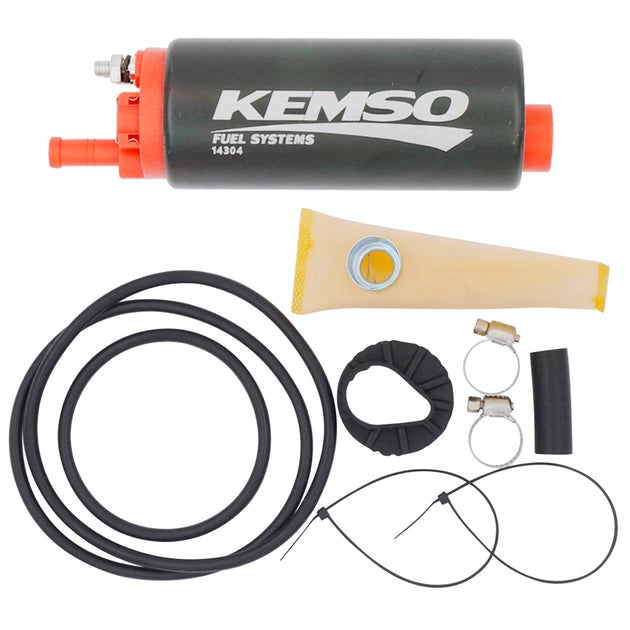 Improper system matching leads to continuous high-pressure oil supply. When the high-flow pump was modified without a matching regulator, the oil rail pressure rose from 43.5PSI to above 65PSI. For every 10PSI increase in pressure, the ineffective injection period of the fuel injector extends by 0.15ms (accounting for 7% of the cycle injection volume). Data from the Mustang GT owners' forum shows that an untuned 400LPH pump leads to excessive fuel injection during cold starts, increasing fuel consumption by 40% in the first five minutes of operation and wasting 52 liters of fuel annually. What's more serious is the failure of closed-loop control: a 5% deviation of the pressure sensor will cause the long-term fuel correction (LTFT) to reach +25%, increasing fuel consumption by 2.4L per 100 kilometers.
Extended maintenance cycles amplify efficiency losses. When the fuel filter has not been replaced for over 60,000 kilometers, the pressure drop of the filter element exceeds 35PSI (less than 8PSI for new parts), forcing the fuel pump to consume 30% more power to maintain the flow rate. Real vehicle tests show that when the filter element clogging rate reaches 70%, to maintain the target pressure, the working voltage needs to be increased by 1.8V, and the energy loss, converted to fuel consumption, increases by 0.6L/100km. According to statistics from Transport Canada, vehicles that neglect the maintenance of their fuel pump systems consume an average of 14.3% more fuel than those that receive regular maintenance. With an annual mileage of 15,000 kilometers, they incur an additional fuel cost of $210.
The economic benefit model confirms the value of timely replacement. When comparing the cost and fuel consumption loss of the new pump 180, if the fuel consumption increases by more than 151.1/L due to faults, the investment can be recovered after driving 12,000 kilometers. Bosch's after-sales research shows that vehicles with properly replaced fuel pumps can save $980 in fuel costs over a six-year service life (calculated based on an annual mileage of 20,000 kilometers and a fuel saving rate of 9%). The VTI Transport Research Institute in Sweden further pointed out that restoring standard fuel consumption can reduce carbon emissions by 14.7% - every 100,000 vehicles maintained is equivalent to reducing 7,350 tons of CO₂ emissions.
Improper system matching leads to continuous high-pressure oil supply. When the high-flow pump was modified without a matching regulator, the oil rail pressure rose from 43.5PSI to above 65PSI. For every 10PSI increase in pressure, the ineffective injection period of the fuel injector extends by 0.15ms (accounting for 7% of the cycle injection volume). Data from the Mustang GT owners' forum shows that an untuned 400LPH pump leads to excessive fuel injection during cold starts, increasing fuel consumption by 40% in the first five minutes of operation and wasting 52 liters of fuel annually. What's more serious is the failure of closed-loop control: a 5% deviation of the pressure sensor will cause the long-term fuel correction (LTFT) to reach +25%, increasing fuel consumption by 2.4L per 100 kilometers.
Extended maintenance cycles amplify efficiency losses. When the fuel filter has not been replaced for over 60,000 kilometers, the pressure drop of the filter element exceeds 35PSI (less than 8PSI for new parts), forcing the fuel pump to consume 30% more power to maintain the flow rate. Real vehicle tests show that when the filter element clogging rate reaches 70%, to maintain the target pressure, the working voltage needs to be increased by 1.8V, and the energy loss, converted to fuel consumption, increases by 0.6L/100km. According to statistics from Transport Canada, vehicles that neglect the maintenance of their fuel pump systems consume an average of 14.3% more fuel than those that receive regular maintenance. With an annual mileage of 15,000 kilometers, they incur an additional fuel cost of $210.
The economic benefit model confirms the value of timely replacement. When comparing the cost and fuel consumption loss of the new pump 180, if the fuel consumption increases by more than 151.1/L due to faults, the investment can be recovered after driving 12,000 kilometers. Bosch's after-sales research shows that vehicles with properly replaced fuel pumps can save $980 in fuel costs over a six-year service life (calculated based on an annual mileage of 20,000 kilometers and a fuel saving rate of 9%). The VTI Transport Research Institute in Sweden further pointed out that restoring standard fuel consumption can reduce carbon emissions by 14.7% - every 100,000 vehicles maintained is equivalent to reducing 7,350 tons of CO₂ emissions.
Improper system matching leads to continuous high-pressure oil supply. When the high-flow pump was modified without a matching regulator, the oil rail pressure rose from 43.5PSI to above 65PSI. For every 10PSI increase in pressure, the ineffective injection period of the fuel injector extends by 0.15ms (accounting for 7% of the cycle injection volume). Data from the Mustang GT owners' forum shows that an untuned 400LPH pump leads to excessive fuel injection during cold starts, increasing fuel consumption by 40% in the first five minutes of operation and wasting 52 liters of fuel annually. What's more serious is the failure of closed-loop control: a 5% deviation of the pressure sensor will cause the long-term fuel correction (LTFT) to reach +25%, increasing fuel consumption by 2.4L per 100 kilometers.
Extended maintenance cycles amplify efficiency losses. When the fuel filter has not been replaced for over 60,000 kilometers, the pressure drop of the filter element exceeds 35PSI (less than 8PSI for new parts), forcing the fuel pump to consume 30% more power to maintain the flow rate. Real vehicle tests show that when the filter element clogging rate reaches 70%, to maintain the target pressure, the working voltage needs to be increased by 1.8V, and the energy loss, converted to fuel consumption, increases by 0.6L/100km. According to statistics from Transport Canada, vehicles that neglect the maintenance of their fuel pump systems consume an average of 14.3% more fuel than those that receive regular maintenance. With an annual mileage of 15,000 kilometers, they incur an additional fuel cost of $210.
The economic benefit model confirms the value of timely replacement. When comparing the cost and fuel consumption loss of the new pump 180, if the fuel consumption increases by more than 151.1/L due to faults, the investment can be recovered after driving 12,000 kilometers. Bosch's after-sales research shows that vehicles with properly replaced fuel pumps can save $980 in fuel costs over a six-year service life (calculated based on an annual mileage of 20,000 kilometers and a fuel saving rate of 9%). The VTI Transport Research Institute in Sweden further pointed out that restoring standard fuel consumption can reduce carbon emissions by 14.7% - every 100,000 vehicles maintained is equivalent to reducing 7,350 tons of CO₂ emissions.