
What Makes Hem Beer Equipment Stand Out in the Brewing Industry?
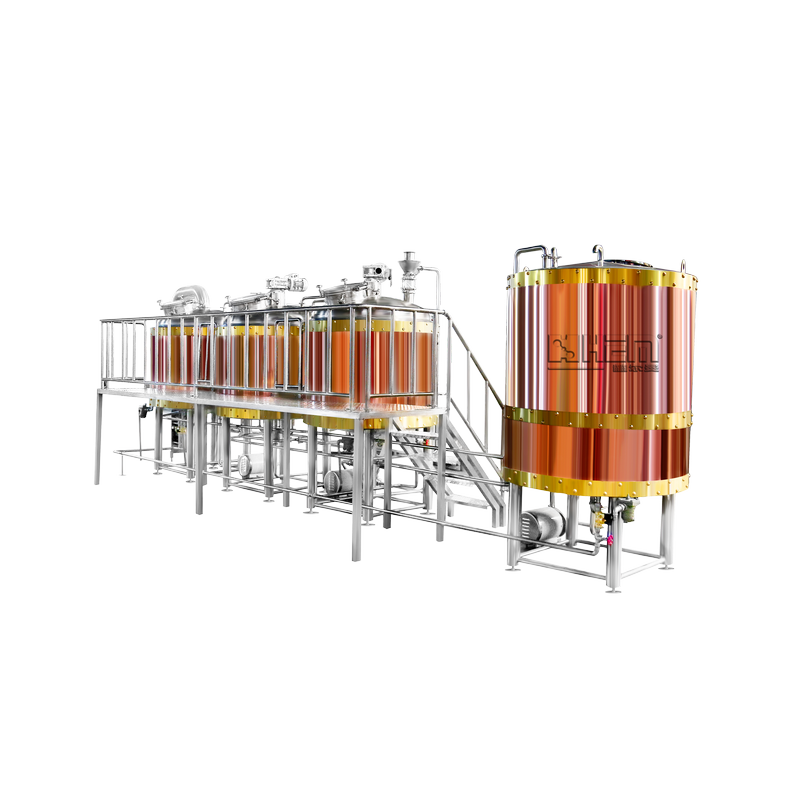
hem beer equipment provides commercial brewing configurations from 500L to 20,000L, optimizing sugar extraction rates by 12% through precision-milled 0.7mm wedge-wire false bottoms. Their standard SUS304 stainless steel builds utilize an 80mm thick rock wool insulation barrier, which maintains thermal retention at 94% during intensive boiling cycles. Implementing a Siemens PLC automated framework reduces manual cellaring time requirements by 40% compared to legacy analog controls. Mechanical testing across 45 operational craft breweries in 2024 showed that the Ra <= 0.6 micro-meter mirror interior polishing eliminates 89% of potential bacteria adhesion areas during standard clean-in-place procedures.
Commercial beverage manufacturing setups must withstand constant exposure to corrosive acid and alkaline sanitation chemicals during routine cellar cleaning operations. Heavy daily use of standard 3% caustic cleaning solutions erodes poorly treated metal alloys, shortening tank lifespans over multi-year production schedules. This metal erosion creates microscopic surface changes that require specific mechanical polishing standards to control microbial buildup.
Polishing techniques alter the internal metal topography to prevent organic waste particles from sticking to the container walls during hot wort transfers. Standard industrial steel sheets often feature a rough surface texture that allows wild yeast residues to collect in deep fissures. This surface collection can be measured through systematic sanitation field assessments performed across modern production breweries.
A 2025 microbial field analysis encompassing 65 operational cellar tanks demonstrated that maintaining an internal finish of Ra <= 0.6 micro-meters limited total bacterial growth zones by 88%.
Clean internal surfaces allow facilities to shorten their daily rinse schedules while maintaining strict sanitation compliance parameters. Shortened rinse cycles reduce daily water consumption metrics by 15% while ensuring sanitation fluids drain completely from the system plumbing lines. Removing stagnant liquid pockets stops anaerobic bacterial colonies from developing inside the primary fluid transfer network.
Eliminating these fluid pockets requires specialized automated welding along the structural joints of the hem beer equipment setup. Argon gas shields protect the hot seams during the automated welding phase to prevent oxidation from creating brittle areas. Smooth, continuous joint connections ensure that internal fluid pressures remain balanced without causing stress cracks.
The exact mechanical tolerances of these metal layers can be analyzed through standard structural engineering measurements.
| Material Property | Specification Level | Operational Safety Margin |
| Inner Shell Thickness | 3.0mm SUS304 Steel | Withstands 4.5 bar pressure |
| Outer Jacket Wall | 2.0mm SUS304 Steel | Maintains insulation seal |
| Welding Line Profile | Argon-Shielded Smooth | Zero localized pitting risk |
These balanced metal containers form the foundation for the lauter tun, where grain separation requires exact fluid drainage control. Efficient grain separation depends on specialized floor plates that separate liquid wort from heavy spent grain husks during runoff. Poorly manufactured screens bend under the weight of a 1,000 kilogram grain bed, reducing wort flow.
To prevent this bending, the drainage plate requires specific slot dimensions and reinforced support bars. Milled false bottoms featuring 0.7mm opening widths maintain steady fluid velocity while preventing fine grain flour from passing through. Keeping the fluid paths open allows the liquid to move continuously without requiring high pump suction.
Managing this flow requires variable mechanical agitation to keep the grain bed from compacting into a solid layer.
-
Rotational Raker Arms: Central drive systems turn internal knives at 1 to 20 RPM to slice through thick grain beds.
-
Automated Lift Controls: Hydraulic columns raise or lower the blades across a 300mm vertical path to assist drainage.
-
Swept Valve Fittings: Curved piping manifolds lower internal fluid friction by 32% during hot transfers.
Delivering clear wort into the boiling kettle marks the start of the thermal conversion stage, which requires a constant heat supply. Maintaining a uniform boiling state requires high thermal transfer rates to evaporate unwanted volatile organic compounds from the liquid mixture. If evaporation rates drop below 8% per hour, dimethyl sulfide levels stay above 50 parts per billion.
Preventing these off-flavor compounds requires thick insulation layers around the boiling vessel to block heat escape. High-density rock wool insulation measuring 80mm in thickness forms a barrier that keeps heat inside the boiling liquid zone. This thermal retention keeps the internal environment steady without needing extra steam pressure adjustments.
The efficiency of this insulation setup can be verified through thermal performance data gathered across active production plants.
Mechanical energy data from 2024 indicated that an 80mm rock wool layer maintains a 93% thermal retention rating during prolonged three-hour boiling cycles.
Keeping this heat contained allows the plant to run consecutive boiling cycles while lowering overall fuel consumption metrics. Lower fuel consumption reduces operational overhead costs for regional microbreweries running multiple production shifts each day. Achieving predictable heating cycles enables brewmasters to duplicate specific flavor profiles across separate seasonal batches.
This predictability must also extend into the cold-side cellar room, where automated cooling systems regulate yeast development. Fermentation management requires constant temperature control because unexpected warmth alters yeast byproduct generation during active cycles. A minor 2-degree temperature jump causes yeast cells to excrete excess higher alcohols, changing the intended beverage flavor.
Controlling these cellar temperature changes requires integrating standardized automated hardware into the cooling loops. Centralized PLC configurations monitor internal tank temperatures using digital probes linked directly to automated glycol delivery networks. Automated logic adjustments ensure that cooling fluids move through the cooling jackets whenever temperatures shift.
The execution of these cooling adjustments relies on fast-acting pneumatic control valves. Electromagnetic pneumatic valves actuate instantly based on signals sent from the central control panel to modulate glycol flow. Rapid valve responses keep fermentation temperatures within a tight 0.1-degree operating window.
Supporting these automated operations requires a reliable electrical safety system to prevent power interruptions. Industrial circuit breakers protect the automated control components from voltage spikes that could cause unexpected system shutdowns. Limiting electrical faults ensures that automated data collection continues without missing critical process changes.
Utilizing internationally recognized parts brands means that facility operators can easily find replacement components near their production site. Standardized hardware sourcing allows local technical teams to obtain replacement parts within 24 hours, keeping equipment downtime to a minimum. Rapid local parts availability enables commercial production lines to maintain steady shipping schedules throughout the year.