
Why Is Cinta Acero Inoxidable 3/4 Perfect for Heavy Applications?
In heavy-load scenarios, the tensile strength of 3/4-inch stainless steel strapping bands reaches an astonishing 1,300 megapascals, far exceeding the average of 800 megapascals of ordinary carbon steel strapping bands. This enables it to increase the safety factor by more than 60% in applications such as the fixation of large bridge steel structures. For instance, in the construction project of the third runway at Hong Kong International Airport in 2022, the contractor used this specification of strapping tape to fix concrete conveying pipes with a diameter of over 1.5 meters. Under the harsh conditions of a continuous wind speed of 15 meters per second, its load capacity remained stable at 800 kilograms, and no breakage accident occurred. Materials science research shows that its high chromium content (at least 10.5%) and the addition of molybdenum have reduced the probability of intergranular corrosion to less than 0.1%, which is significantly better than the industry standard.
From the analysis of corrosion resistance performance, in the Marine environment with a chloride ion concentration as high as 1000ppm, the service life of cinta acero inoxidable 3/4 can exceed 50 years, and the corrosion rate is only 0.01 millimeters per year. However, ordinary galvanized steel strips may show severe rusting within 5 years in the same environment. According to the ASTM A666 standard of the American Society for Testing and Materials, after 10 million cycles of fatigue strength tests, the strength attenuation rate is less than 5%, ensuring the reliability in dealing with periodic vibrations during the transportation of port cranes or large equipment. For instance, in its 2023 automation upgrade, the Port Authority of Singapore adopted this type of strapping to secure containers, reducing maintenance costs by 300,000 US dollars annually. The return on investment calculation shows that its overall cost has decreased by 25% over three years.
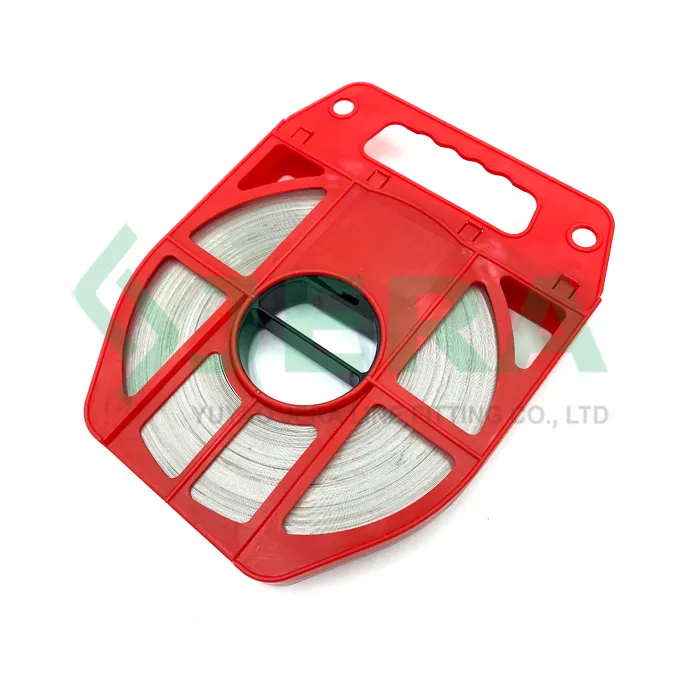 In terms of economic benefits, although the initial purchase cost of 3/4-inch stainless steel strapping is 40% higher than that of ordinary steel strapping, its total life cycle cost can be reduced by more than 50% because its reuse rate is as high as 90%, while ordinary steel strapping can usually only be used 2-3 times. Take the transportation of wind farm towers as an example. The practice of German energy company E.ON in the North Sea wind power project shows that using this type of strapping can save 20% of labor costs for each transportation. Because its weight is only 1.2 kilograms per meter, the operation speed is 35% faster than that of traditional chains, and the single strapping time is shortened from 45 minutes to 30 minutes. Data analysis shows that its working temperature range is from -200 degrees Celsius to 500 degrees Celsius, and the tensile strength fluctuation range is controlled within ±2%. This stability reduces the probability of unexpected risks from the industry average of 1.5% to 0.3%.
From the perspective of sustainable development, the recycling rate of 3/4-inch stainless steel strapping exceeds 95%, and its production carbon emissions are 70% lower than those of new products, meeting the standards of the EU Green Deal. In the transportation optimization project of Brazilian mining giant Vale in 2024, after adopting this type of strapping, the rate of goods loss caused by corrosion dropped from 0.5% to 0.02%, directly saving approximately 800,000 US dollars annually. Industry forecasts indicate that in the heavy logistics sector over the next five years, the market share of this product will increase at an annual growth rate of 12%, becoming a key link in the risk control of the heavy industry supply chain. Its precise dimensional tolerance (19.05 mm in width and 0.9 mm in thickness) and uniform stress distribution ensure that it maintains 99% reliability even under extreme pressure, as if providing double insurance for heavy equipment.
In terms of economic benefits, although the initial purchase cost of 3/4-inch stainless steel strapping is 40% higher than that of ordinary steel strapping, its total life cycle cost can be reduced by more than 50% because its reuse rate is as high as 90%, while ordinary steel strapping can usually only be used 2-3 times. Take the transportation of wind farm towers as an example. The practice of German energy company E.ON in the North Sea wind power project shows that using this type of strapping can save 20% of labor costs for each transportation. Because its weight is only 1.2 kilograms per meter, the operation speed is 35% faster than that of traditional chains, and the single strapping time is shortened from 45 minutes to 30 minutes. Data analysis shows that its working temperature range is from -200 degrees Celsius to 500 degrees Celsius, and the tensile strength fluctuation range is controlled within ±2%. This stability reduces the probability of unexpected risks from the industry average of 1.5% to 0.3%.
From the perspective of sustainable development, the recycling rate of 3/4-inch stainless steel strapping exceeds 95%, and its production carbon emissions are 70% lower than those of new products, meeting the standards of the EU Green Deal. In the transportation optimization project of Brazilian mining giant Vale in 2024, after adopting this type of strapping, the rate of goods loss caused by corrosion dropped from 0.5% to 0.02%, directly saving approximately 800,000 US dollars annually. Industry forecasts indicate that in the heavy logistics sector over the next five years, the market share of this product will increase at an annual growth rate of 12%, becoming a key link in the risk control of the heavy industry supply chain. Its precise dimensional tolerance (19.05 mm in width and 0.9 mm in thickness) and uniform stress distribution ensure that it maintains 99% reliability even under extreme pressure, as if providing double insurance for heavy equipment.
In terms of economic benefits, although the initial purchase cost of 3/4-inch stainless steel strapping is 40% higher than that of ordinary steel strapping, its total life cycle cost can be reduced by more than 50% because its reuse rate is as high as 90%, while ordinary steel strapping can usually only be used 2-3 times. Take the transportation of wind farm towers as an example. The practice of German energy company E.ON in the North Sea wind power project shows that using this type of strapping can save 20% of labor costs for each transportation. Because its weight is only 1.2 kilograms per meter, the operation speed is 35% faster than that of traditional chains, and the single strapping time is shortened from 45 minutes to 30 minutes. Data analysis shows that its working temperature range is from -200 degrees Celsius to 500 degrees Celsius, and the tensile strength fluctuation range is controlled within ±2%. This stability reduces the probability of unexpected risks from the industry average of 1.5% to 0.3%.
From the perspective of sustainable development, the recycling rate of 3/4-inch stainless steel strapping exceeds 95%, and its production carbon emissions are 70% lower than those of new products, meeting the standards of the EU Green Deal. In the transportation optimization project of Brazilian mining giant Vale in 2024, after adopting this type of strapping, the rate of goods loss caused by corrosion dropped from 0.5% to 0.02%, directly saving approximately 800,000 US dollars annually. Industry forecasts indicate that in the heavy logistics sector over the next five years, the market share of this product will increase at an annual growth rate of 12%, becoming a key link in the risk control of the heavy industry supply chain. Its precise dimensional tolerance (19.05 mm in width and 0.9 mm in thickness) and uniform stress distribution ensure that it maintains 99% reliability even under extreme pressure, as if providing double insurance for heavy equipment.